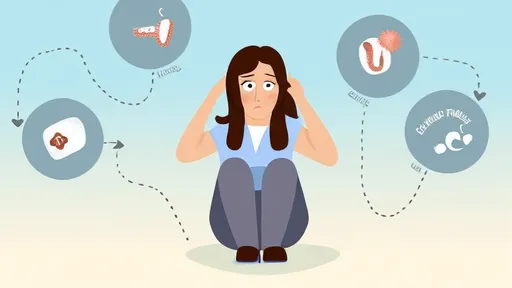
The concept of the anxiety rubber band has quietly permeated modern mental health discussions, offering a tactile metaphor for the invisible struggles of daily stress. Unlike clinical diagnoses or pharmaceutical interventions, this unassuming tool represents a grassroots approach to self-regulation—one that fits in a pocket and costs pennies. The phenomenon speaks volumes about our collective need for simple, accessible coping mechanisms in an era of overwhelming complexity.
At its core, the anxiety rubber band technique involves wearing a standard office rubber band around the wrist. When intrusive thoughts or spiraling worries emerge, the user gently snaps the band against their skin. The momentary sting creates what psychologists call an "interruptive stimulus"—a physical sensation that disrupts the neural pathways of repetitive anxiety. This isn't about punishment, but rather creating a neurological circuit breaker when mental patterns become destructive.
The origins of this practice remain delightfully obscure. Some trace it to 1970s behavior modification therapies, while others insist it emerged from Silicon Valley tech workers during the dot-com bubble. What's undeniable is its viral spread through mental health forums and workplace wellness programs. Unlike many therapeutic tools requiring professional supervision, the rubber band method carries an irresistible appeal of immediacy and autonomy—qualities desperately needed in our time-crunched world.
Modern adaptations have transformed this basic concept into a minor wellness industry. Specialty rubber bands now come infused with calming scents like lavender, while others feature motivational embossing. Some enterprising therapists have developed graduated systems with different colored bands representing varying tension levels. Yet purists maintain that the magic lies in the mundane—the very ordinariness of the office supply strip keeps the practice grounded and accessible.
Neuroscience helps explain why such a simple intervention shows remarkable staying power. The snap creates what researchers call a "somatic anchor"—a physical sensation that momentarily overrides the brain's default mode network responsible for rumination. This brief interruption creates a window of opportunity to consciously redirect thoughts. It's not unlike rebooting a frozen computer; the system gets a chance to reset before unhealthy patterns fully lock in.
Critics argue the technique merely treats symptoms rather than addressing root causes of anxiety. Some mental health professionals express concern about potential overuse leading to mild skin irritation or the band becoming a compulsive ritual. Yet even skeptics acknowledge its value as a transitional tool—what one psychologist described as "training wheels for emotional regulation"—particularly for those not yet ready for or unable to access traditional therapy.
The cultural significance of the anxiety rubber band extends beyond its therapeutic utility. In workplaces and classrooms, the visible presence of the band has become a subtle signal—a way to communicate one's internal struggle without verbal explanation. This unspoken language creates unexpected bonds; spotting a coworker or classmate with the same humble tool often sparks quiet moments of mutual understanding and support.
As mental health conversations continue destigmatizing, the anxiety rubber band stands as a testament to human ingenuity in self-care. It represents a democratization of coping mechanisms—free from corporate influence, requiring no prescription, and adaptable to individual needs. In our increasingly digital world, perhaps there's profound wisdom in returning to such analog solutions for digital-age problems.
Future applications continue evolving. Some therapists now combine the rubber band technique with mindfulness practices, using the snap as a cue to engage in brief breathing exercises. Tech hybrids have emerged, including smart bands that vibrate instead of snap for more discreet use in professional settings. Yet the original version persists, proving that sometimes the most effective solutions are those that have been within arm's reach all along.
The anxiety rubber band phenomenon ultimately reflects a broader cultural shift—a move toward acknowledging mental health as an ongoing practice rather than a problem with permanent solutions. In its simplicity lies its power: a physical reminder that discomfort is temporary, that interventions can be gentle, and that small actions accumulate into meaningful change. As both symbol and tool, it continues to snap millions back to the present moment—one gentle sting at a time.

By /Aug 19, 2025

By /Aug 19, 2025

By /Aug 19, 2025

By /Aug 19, 2025

By /Aug 19, 2025

By /Aug 19, 2025
By /Aug 19, 2025

By /Aug 19, 2025

By /Aug 19, 2025

By /Aug 19, 2025
By /Aug 15, 2025

By /Aug 15, 2025

By /Aug 15, 2025

By /Aug 15, 2025

By /Aug 15, 2025

By /Aug 15, 2025

By /Aug 15, 2025
By /Aug 15, 2025

By /Aug 15, 2025

By /Aug 15, 2025
