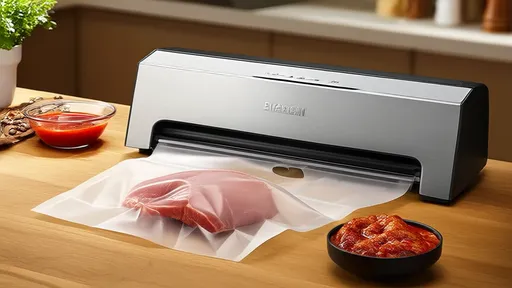
In the world of culinary innovation, the vacuum sealer has long been a trusted ally for preserving freshness and extending the shelf life of ingredients. Tucked away in pantries and professional kitchens alike, its primary function seems straightforward. Yet, beneath this utilitarian surface lies a transformative technique that challenges one of cooking's most time-honored processes: marination. The conventional method of soaking food in a flavorful bath for hours, or even days, is being upended. The vacuum sealer, it turns out, is not just a tool for stasis but a powerful catalyst for rapid and profound flavor infusion.
The science behind this accelerated process is rooted in the fundamental principles of physics and food chemistry. At its core, marination is a race against time, a battle to transport flavor molecules from a liquid seasoning into the dense cellular structure of meat, fish, or vegetables. Atmospheric pressure is the invisible barrier that makes this a slow endeavor. In a traditional zip-top bag or bowl, countless tiny air pockets are trapped against the surface of the food. This layer of air acts as an insulator, dramatically slowing down the osmotic process where liquids and dissolved seasonings move into the food's cells.
Enter the vacuum sealer. By powerfully extracting the air from a specially designed bag, the machine eliminates this insulating barrier entirely. The plastic bag, now form-fitting and tight against every contour and crevice of the food, creates an intimate seal. This action does more than just remove air; it dramatically alters the pressure environment surrounding the ingredient. The external atmospheric pressure now presses the marinade directly onto the food's surface with immense force. This pressure differential is the engine of rapid marination. It forcefully pushes the liquid seasoning into the food, bypassing the slow, passive diffusion of traditional methods and achieving in minutes what used to take half a day.
The mechanics of executing this technique are elegantly simple, yet a few key steps ensure success and safety. The process begins with the creation of your marinade. Because the infusion is so efficient, you can often use less liquid than you would for a traditional soak. The food is then placed inside a vacuum sealer bag, and the marinade is poured over it. It is crucial to use bags specifically designed for vacuum sealing, as their stronger construction prevents punctures and ensures a reliable seal. For particularly liquid-heavy marinades, a pro tip is to briefly freeze the liquid beforehand. This prevents the machine from accidentally sucking up the marinade, which can damage the appliance and create a mess.
Once the bag is sealed and the air is removed, the magic happens on its own. The marination time is not just reduced; it is revolutionized. A thick cut of pork or beef that would normally require an overnight soak can achieve deep, penetrating flavor in as little as twenty to thirty minutes. More delicate proteins like fish fillets or shrimp might be perfectly marinated in a mere ten to fifteen minutes. This isn't a superficial coating; the vacuum pressure ensures the flavors reach deep into the tissue. However, this power demands vigilance. The intense process can begin to "cook" the exterior of delicate proteins like fish or seafood through denaturation, much like the effect of citrus in a ceviche. For these items, marination times must be closely monitored to avoid an undesirable textural change.
The applications for this method stretch far beyond the standard soy-and-garlic beef marinade. Its efficiency opens up a new world of culinary experimentation. Imagine preparing a complex, layered spice rub for a lamb rack. Under vacuum, the oils and spices are driven into the meat, creating a crust-like flavor from the inside out before it even touches the heat. Brining, a cousin to marination, is also supercharged. A vacuum-sealed turkey breast can be fully brined in a fraction of the usual time, guaranteeing a juicier, more flavorful result for a weeknight dinner. The technique is a boon for vegetable preparation as well. Vacuum marinating vegetables like zucchini, mushrooms, or asparagus in olive oil, herbs, and acid before grilling or roasting imbues them with a restaurant-quality depth of flavor instantly.
For the culinary professional, the implications are significant. In a high-volume kitchen, time is the most precious commodity. The ability to marinate proteins to order, or in batches throughout service, rather than dedicating valuable cooler space to overnight projects, revolutionizes kitchen logistics and menu flexibility. It allows for à la minute preparation of marinated specials, ensuring the absolute peak of freshness and texture. For the ambitious home cook, it demolishes the need for advanced planning. The spontaneous decision to have fajitas for dinner is no longer hampered by the need to have marinated the skirt steak since morning. A vacuum seaser makes "slow" flavors a fast reality.
Of course, such a powerful tool requires mindful usage. The intense pressure can make delicate foods like soft berries or flaky cooked fish fall apart, so understanding the integrity of your ingredient is key. Furthermore, because the process is so effective, the balance of salt and acid in a marinade must be carefully considered. A marinade that tastes perfectly balanced in the bowl might become overpowering once forcefully infused into the food. It is always wise to start with a slightly less aggressive seasoning profile and adjust in subsequent batches. Always marinate in the refrigerator to keep food safely out of the temperature danger zone.
Ultimately, the vacuum sealer’s role in the kitchen is undergoing a profound reevaluation. It is being rediscovered not as a mere appliance for storage, but as an active, dynamic instrument for creation. It compresses time itself, turning the slow art of marination into a quick, powerful, and precise technique. By harnessing the simple power of a vacuum, it unlocks depths of flavor previously unattainable without patience measured in hours. It empowers both chefs and home cooks to execute with unparalleled efficiency and creativity, proving that some of the most revolutionary tools are not new inventions, but old ones seen in a brilliant new light.

By /Aug 20, 2025
By /Aug 20, 2025

By /Aug 20, 2025

By /Aug 20, 2025
By /Aug 20, 2025

By /Aug 20, 2025

By /Aug 20, 2025
By /Aug 20, 2025

By /Aug 20, 2025
By /Aug 20, 2025
By /Aug 20, 2025

By /Aug 20, 2025
By /Aug 20, 2025

By /Aug 20, 2025
By /Aug 20, 2025
By /Aug 20, 2025

By /Aug 20, 2025
By /Aug 20, 2025
By /Aug 20, 2025
By /Aug 20, 2025
