In the world of culinary craftsmanship, the German chef's knife stands as an icon of precision and reliability. For both professional chefs and home cooks, selecting the right knife is not merely about the blade's sharpness or the steel's quality; it is an intimate dialogue between the tool and the hand that wields it. The concept of the balance point—a term often whispered in knife shops and kitchen corridors—holds the key to this relationship. It is the pivot point where the knife feels weightless in your hand, where control feels innate rather than forced. Understanding this principle transforms the act of cutting from a chore into an extension of one's culinary expression.
When you first pick up a German chef's knife, you might notice its substantial heft compared to its Japanese or French counterparts. This weight is not a flaw but a feature, designed to assist with tough tasks like chopping through bones or dense vegetables. However, that weight must be distributed in harmony with your grip. The balance point is typically found where the blade meets the handle, often right at the bolster or just behind it. A well-balanced knife will feel like an extension of your arm, reducing fatigue and increasing precision during prolonged use. It is this equilibrium that separates a good knife from a great one.
Your hand size and grip style play a pivotal role in determining the ideal balance. Those with larger hands might prefer a knife where the balance point is slightly forward, lending more power to each cut. Conversely, individuals with smaller hands may find that a neutral or handle-heavy balance offers better control without strain. The way you hold the knife—whether you use a pinch grip, where your thumb and forefinger grasp the blade, or a handle grip, where your entire hand wraps around the handle—will also influence your perception of balance. There is no universal right answer; it is a deeply personal preference that can only be discovered through physical interaction with the knife.
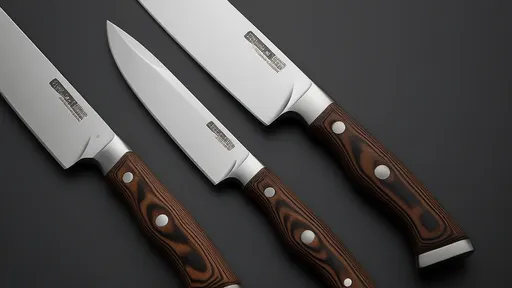
Beyond hand size, the knife's design elements contribute significantly to its balance. The tang—the portion of the blade that extends into the handle—is a critical factor. A full tang, where the metal runs the entire length of the handle, often provides a more forward balance, ideal for heavy-duty tasks. A partial tang might shift the balance toward the handle, offering agility for precise slicing. The handle material, whether it be wood, composite, or synthetic, also affects weight distribution. Wood handles, for instance, can be lighter, potentially making the blade feel heavier, while denser materials like Pakkawood or G-10 might counterbalance a hefty blade.
To truly assess balance, you must go beyond specifications and engage in a hands-on test. When visiting a store, pick up the knife and mimic your typical cutting motion. Pay attention to how it feels in your hand—does it tip forward or backward? Does it feel stable or unwieldy? A well-balanced knife should feel natural, almost as if it guides your hand rather than fights it. Some experts recommend the "finger test": balance the knife on your index finger to find its pivot point. If it rests comfortably where your hand naturally grips, you are likely holding a knife that suits you.
The balance point is not just about comfort; it directly impacts your cutting technique and safety. A poorly balanced knife can lead to uneven cuts, increased slippage, and even repetitive strain injuries over time. In a professional kitchen, where speed and consistency are paramount, the right balance can mean the difference between a flawless service and a chaotic one. For home cooks, it can turn meal preparation from a tedious task into a joyful ritual. Investing time in finding this harmony is an investment in your culinary journey.
German knives, with their robust construction and ergonomic designs, often excel in providing a balanced experience. Brands like Wüsthof, Zwilling, and Messermeister have spent decades refining their designs to cater to a variety of hand sizes and preferences. However, even within these renowned lines, balance can vary from model to model. It is essential to try multiple options rather than relying solely on brand reputation. Remember, the most expensive knife is not necessarily the best one for you—it is the one that disappears in your hand, becoming a seamless part of your motion.
In conclusion, the journey to finding the perfect German chef's knife is a blend of science and sensation. The balance point serves as the bridge between the knife's engineering and your unique physiology. By prioritizing this often-overlooked aspect, you empower yourself to choose a tool that enhances your skills, protects your well-being, and elevates your cooking to an art form. So, the next time you stand before a wall of gleaming blades, let your hand be the judge—because the right balance is not just felt; it is remembered.

By /Aug 20, 2025
By /Aug 20, 2025

By /Aug 20, 2025

By /Aug 20, 2025

By /Aug 20, 2025

By /Aug 20, 2025

By /Aug 20, 2025
By /Aug 20, 2025

By /Aug 20, 2025

By /Aug 20, 2025
By /Aug 20, 2025
By /Aug 20, 2025
By /Aug 20, 2025
By /Aug 20, 2025

By /Aug 20, 2025
By /Aug 20, 2025
By /Aug 20, 2025
By /Aug 20, 2025
By /Aug 20, 2025

By /Aug 20, 2025
