The King of Heat Conduction in Copper Pots: Why French Sauces Cannot Do Without It

Aug 20, 2025 By

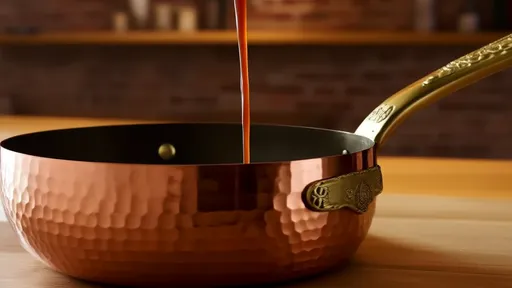
In the hushed, steam-filled kitchens of France’s most revered restaurants, a quiet revolution in sauce-making has been simmering for centuries. It is not led by a flashy new appliance or a complex chemical process, but by a humble, timeless vessel: the unlined copper pot. To the uninitiated, it might appear as merely a beautiful, antiquated piece of cookware. But for the saucier—the master of sauces—it is an indispensable, non-negotiable tool, the very heart of their craft. The relationship between copper and the classic French sauce is a profound synergy of chemistry, physics, and tradition, a partnership so effective it borders on alchemy.

The secret to copper’s supremacy lies not in its aesthetic appeal, though its warm glow is certainly prized, but in its phenomenal physical properties. Copper is, quite simply, one of the most efficient conductors of heat on the planet. This exceptional conductivity means that when heat is applied to the bottom of a copper pot, it is distributed across the entire surface almost instantaneously and with breathtaking uniformity. There are no hot spots, those dreaded areas where a delicate sauce can suddenly scorch, seizing proteins and introducing a bitter, burnt flavour that can ruin hours of work. Instead, the heat is even, predictable, and responsive. When a saucier adjusts the flame, the copper pot reacts immediately, allowing for minute, precise control over temperature—a critical factor when emulsifying butter into a beurre blanc or reducing a velouté to the perfect nappé consistency, the point where it thickly coats the back of a spoon.

This unparalleled control is the bedrock of French sauce work. Consider the hollandaise, a notoriously temperamental emulsion of egg yolks, melted butter, and lemon juice. It exists in a precarious state, forever on the verge of breaking—splitting into a greasy, curdled mess. The window of ideal temperature for creating and maintaining this emulsion is incredibly narrow. Too cool, and the butter will solidify and the sauce will not emulsify; too hot, and the egg yolks will scramble. A stainless steel or aluminum pan, with its uneven heat distribution, makes this a high-wire act. A copper bowl, however, traditionally used for whisking the yolks, and a copper pot for clarifying the butter, change the game. The metal reacts with the egg yolks in a way that slightly stabilizes the proteins, but more importantly, the gentle, even ambient heat from the bowl itself helps maintain the perfect temperature throughout the whipping process, guiding the saucier to a flawless, velvety result.

Beyond its thermal mastery, copper engages in a subtle chemical dialogue with its contents, particularly with egg-based sauces and fruit jams. This interaction is most evident when whipping egg whites. In a copper bowl, egg whites whip up higher and denser, and the resulting foam is far more stable. This phenomenon occurs because minute amounts of copper ions transfer from the bowl into the egg whites. These ions form a complex with the conalbumin, a protein in the egg whites, which stabilizes the foam's structure and prevents it from over-coagulating. This is why a meringue or a soufflé base made in copper has a distinct advantage in texture and volume. While this effect is most dramatic with egg whites, a similar, though more subtle, interaction is believed to occur with the yolks and other proteins in rich sauces, contributing to a silkier, more refined mouthfeel that is the hallmark of a truly great sauce.

The creation of a classic French sauce is rarely a simple affair. It is often a marathon of reduction, a process of patiently simmering a liquid to evaporate water and concentrate flavours. A robust stock, the foundation of countless sauces, might reduce for hours. Wine for a Bordelaise or a reduction for a demi-glace must be cooked down with painstaking care. Here, copper’s efficient and even heating is once again paramount. It ensures that the reduction happens consistently across the entire surface area, preventing any part of the liquid from caramelizing or burning before the rest has concentrated. This allows for a clean, deep, and complex flavour profile without any acrid, burnt notes. The saucier can achieve a powerful concentration of taste while maintaining the clarity and integrity of the original flavours.

Of course, this unparalleled performance comes with a price, both financial and in terms of upkeep. A true, heavy-gauge tin-lined copper pot is a significant investment, often costing several hundred dollars or more. Furthermore, copper is reactive. Cooking acidic foods like tomatoes or wine directly in an unlined copper pot can lead to the leaching of toxic metal into the food. This is why most copper cookware is lined with a thin layer of another metal, traditionally tin. Tin is safe, non-reactive, and has good thermal properties, though it is softer and will eventually wear down, requiring the pot to be re-tinned every few decades. Some modern pots use a stainless steel lining, which is more durable but not quite as efficient a heat conductor as tin. This necessary maintenance—the polishing to keep its shine and the occasional re-tinning—is a ritual that chefs accept as the cost of doing business at the highest level.

In an age dominated by stainless steel clad cookware and non-stick innovations, the continued reverence for copper might seem like anachronistic chef folklore. However, to dismiss it as mere tradition is to miss the point entirely. While a talented cook can certainly produce a good sauce in a stainless steel pan, the copper pot provides a margin of error and a level of control that is simply unattainable with other materials. It is the difference between a capable reproduction and the original masterpiece. It is the tool that allows the artist to execute their vision with absolute precision. In the hands of a master, the copper pot is not just a pan; it is an instrument. The gentle scrape of a whisk against its tin-lined interior, the visual cue of tiny bubbles forming evenly around the perimeter, the immediate response to a change in the flame—these are the sensory feedback loops that guide the creation of something extraordinary.

The legacy of the copper pot is woven into the very fabric of French culinary history. It is the unsung hero behind the mother sauces—béchamel, velouté, espagnole, tomato, and hollandaise—that form the cornerstone of the entire discipline. From these five, hundreds of derivative sauces are born, each relying on the same fundamental principles of heat management and emulsion that copper facilitates so perfectly. The celebrated sauces that have defined generations of haute cuisine—the rich, dark demi-glace, the airy, sharp béarnaise, the delicate, aromatic beurre blanc—were all perfected in these vessels. They are the result of a perfect partnership between human skill and material excellence.

Therefore, to declare that French sauces离不开 copper, that they cannot do without it, is not culinary exaggeration. It is a statement of fact grounded in science and proven by centuries of practice. The copper pot is the silent guardian of flavour, the guarantor of texture, and the enabler of perfection. It transforms the volatile and the fragile into the stable and the sublime. In the alchemical journey from simple ingredients to a transcendent sauce that can elevate a dish from mere sustenance to art, copper is the essential catalyst. It is, and will likely remain, the undisputed导热之王—the king of heat conduction—in the world of classic cuisine.
Recommend Posts
Food

Greek Frappé Coffee: The Relationship Between the Number of Shakes and the Density of Foam

By /Aug 20, 2025

In the sun-drenched cafes of Greece, there exists a ritual as integral to the culture as the ancient ruins that dot the landscape. It is the making of a Frappé. This iconic iced coffee, born from a moment of serendipity at the 1957 Thessaloniki International Fair, is more than a mere beverage; it is a symbol of social connection, leisurely afternoons, and a specific, almost alchemical, transformation. At the heart of this transformation lies its most defining characteristic: the thick, creamy, and persistent layer of foam that crowns the drink. This foam is not a byproduct but the very soul of the Frappé, and its quality is dictated by one crucial, human-controlled variable: the number of vigorous shakes administered to its core ingredients in the fateful mixing vessel.
Food

Natural Wine: Are Haziness and Sedimentation Quality Issues?"

By /Aug 20, 2025

In the world of natural wine, few topics spark as much debate as the presence of haze and sediment in the bottle. To the uninitiated, a cloudy glass can signal a flawed or spoiled product, an immediate turn-off. For enthusiasts, however, that very same cloudiness is often a badge of honor, a visual testament to a wine made with minimal intervention. The question of whether these characteristics represent a quality issue is not a simple one; it sits at the intersection of winemaking philosophy, consumer expectation, and sensory science.
Food

Home-Ground Masala Spice Blend Recipe for Indian Chai Tea

By /Aug 20, 2025

There is something deeply comforting about the ritual of making masala chai from scratch. While tea bags and pre-mixed powders offer convenience, they simply cannot replicate the vibrant, complex symphony of flavors that comes from toasting and grinding your own spices. This is more than a recipe; it is an invitation to connect with an ancient tradition, to fill your kitchen with an intoxicating aroma, and to ultimately craft a cup of chai that is uniquely and profoundly yours.
Food

Aperol Spritz: Proportion of Soda Water to Prosecco

By /Aug 20, 2025

There is something undeniably magical about the golden hour in Venice, when the sun begins its slow descent behind the ancient palazzos, casting a warm, honeyed glow across the canals. In the piazzas, the gentle clinking of glasses provides the soundtrack to this daily ritual. At the heart of this symphony is the Aperol Spritz, a vibrant, effervescent cocktail that is far more than a simple drink; it is a cultural institution, a symbol of la dolce vita, and the subject of a surprisingly passionate debate that centers on a seemingly simple question: what is the perfect ratio of Prosecco to soda water?
Food

Cold Brew Coffee Flavor Profile: 12 Hours vs 24 Hours Soaking Time

By /Aug 20, 2025

In the world of specialty coffee, few brewing methods have captured the imagination of aficionados and casual drinkers alike quite like cold brew. Its smooth, less acidic profile has become a staple in cafes and home kitchens, offering a refreshing alternative to its hot-brewed counterpart. At the heart of perfecting this method lies a critical variable: time. The duration of the steeping process is not merely a matter of convenience; it is the primary sculptor of the final beverage's character. This exploration delves into the intricate dance between time and taste, specifically comparing the 12-hour and 24-hour extraction timelines, to map out the distinct flavor curves each produces.
Food

British Afternoon Tea Blend: The Mixing Ratio of Assam and Ceylon Black Tea

By /Aug 20, 2025

There is a certain alchemy to the British afternoon tea blend that transcends mere beverage preparation, entering the realm of cultural ritual. At its heart lies the masterful combination of two titans of the black tea world: the malty, robust character of Assam from Northeast India and the bright, citrusy notes of Ceylon from the island nation of Sri Lanka. This is not a simple mixture but a carefully calibrated symphony, a pursuit of the perfect cup that has defined a tradition for over a century. The quest for the ideal ratio is a story of taste, terroir, and the very essence of a British social institution.
Food

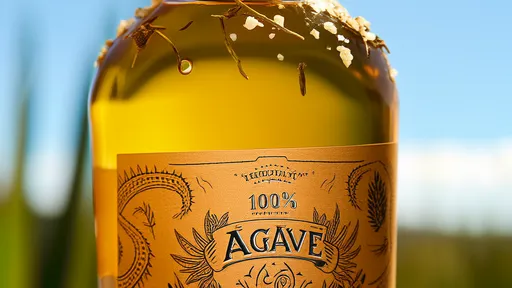
The Importance of the 100% Agave Label on Mexican Tequila

By /Aug 20, 2025

In the world of spirits, few names evoke as much passion and tradition as Tequila. Born from the heart of the blue agave plant in the sun-drenched fields of Mexico, this iconic beverage carries with it centuries of cultural heritage and craftsmanship. Yet, for all its global popularity, there remains a critical distinction that every discerning drinker must understand: the significance of the "100% Agave" label. This simple phrase is not merely a marketing term; it is a promise of authenticity, quality, and a deeper connection to the spirit's true origins.
Food

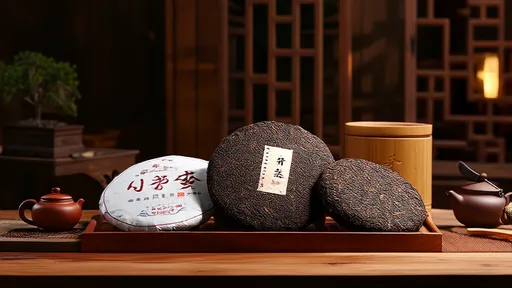
Chinese Pu'er Tea Blending: The Art of Merging Flavors from Different Years and Production Areas

By /Aug 20, 2025

In the misty mountains of Yunnan, where ancient tea trees whisper secrets to the clouds, a profound alchemy unfolds—one that transcends mere blending and enters the realm of artistry. The craft of Pu-erh tea blending, particularly the harmonious marriage of leaves from different years and diverse terroirs, is not just a technique; it is a narrative woven with patience, intuition, and a deep reverence for nature’s nuances. This is where time and earth converge in a cup, telling stories of rain, soil, and seasons.
Food

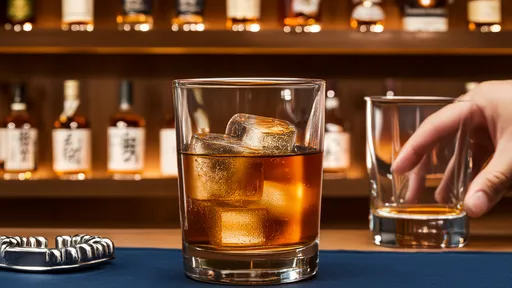
Japanese Whisky Mizuwari: The Ratio of Water to Whisky and Temperature

By /Aug 20, 2025

In the world of Japanese whisky, there exists a ritual as refined as the spirit itself—the art of Mizuwari. This traditional method of dilution, whose name literally translates to "mixed with water," is far more than a mere mixing technique; it is a deliberate, almost meditative practice that unlocks the soul of the whisky. While the core ingredients are simple—just whisky and water—the mastery lies in the profound understanding of their relationship, specifically the precise interplay between ratio and temperature. This is not about drowning the spirit but about coaxing it to reveal its deepest secrets, creating a beverage that is both refreshing and profoundly complex.
Food

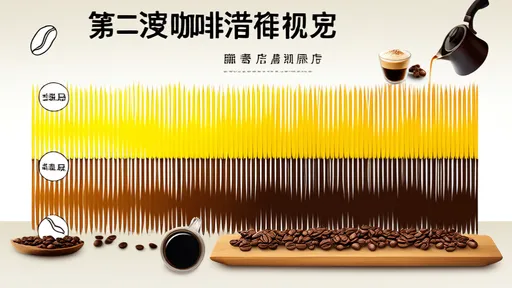
The Third Wave of Coffee: The Spectrum of Acidity and Bitterness in Light, Medium, and Dark Roasts

By /Aug 20, 2025

The world of specialty coffee has been fundamentally reshaped by the Third Wave movement, a paradigm shift that treats coffee not as a mere commodity but as an artisanal product, akin to fine wine. This philosophy champions transparency, sustainability, and, most critically for the drinker, a profound appreciation for the bean's inherent flavor profile. At the very heart of this sensory exploration lies the roasting process, the alchemical transformation that unlocks a bean's potential. The degree of roast—light, medium, or dark—acts as the primary conductor, orchestrating the complex symphony of acids and bitter compounds that define our cup. This journey along the roast spectrum is a delicate balancing act between preserving the bean's origin character and developing the rich, comforting notes we associate with coffee.
Food

Mortar and Pestle: The Difference in Flavor Between Freshly Ground Spices and Sesame"

By /Aug 20, 2025

In the quiet corners of kitchens across Japan, a distinctive piece of ceramicware holds a place of profound respect. The suribachi, a ridged grinding bowl, and its wooden pestle, the surikogi, are not merely tools; they are the guardians of flavor, the keepers of aroma, and the bridge to a culinary tradition where patience is the most crucial ingredient. While the modern world races towards convenience with pre-ground spices and pastes available at the flick of a wrist, a dedicated few understand that the true soul of a dish is often unlocked not by a blade, but by the gentle, crushing friction of stone on stone.
Food

The King of Heat Conduction in Copper Pots: Why French Sauces Cannot Do Without It

By /Aug 20, 2025

In the hushed, steam-filled kitchens of France’s most revered restaurants, a quiet revolution in sauce-making has been simmering for centuries. It is not led by a flashy new appliance or a complex chemical process, but by a humble, timeless vessel: the unlined copper pot. To the uninitiated, it might appear as merely a beautiful, antiquated piece of cookware. But for the saucier—the master of sauces—it is an indispensable, non-negotiable tool, the very heart of their craft. The relationship between copper and the classic French sauce is a profound synergy of chemistry, physics, and tradition, a partnership so effective it borders on alchemy.
Food

The Necessity of a Meat Thermometer: Bidding Farewell to Guesswork and Accurately Judging Doneness

By /Aug 20, 2025

In the world of culinary arts, few skills are as revered—and as frequently botched—as the ability to cook meat to perfection. For generations, home cooks and even some professionals have relied on outdated, unreliable methods to determine doneness. The press of a finger, the color of the juices, the firmness of the flesh—these techniques are not just imprecise; they are a disservice to the ingredients and the effort invested in preparing a meal. It is high time we embrace a more scientific, accurate approach: the use of a temperature probe. This tool is not a luxury for the elite; it is an essential instrument for anyone serious about delivering consistently excellent results.
Food

Choosing the Right Chef's Knife for Your Hand Size: The German Knife Balance Point

By /Aug 20, 2025

In the world of culinary craftsmanship, the German chef's knife stands as an icon of precision and reliability. For both professional chefs and home cooks, selecting the right knife is not merely about the blade's sharpness or the steel's quality; it is an intimate dialogue between the tool and the hand that wields it. The concept of the balance point—a term often whispered in knife shops and kitchen corridors—holds the key to this relationship. It is the pivot point where the knife feels weightless in your hand, where control feels innate rather than forced. Understanding this principle transforms the act of cutting from a chore into an extension of one's culinary expression.
Food

Global Applicability of Air Fryers: A Comparative Analysis of Making Snacks from Different Countries

By /Aug 20, 2025

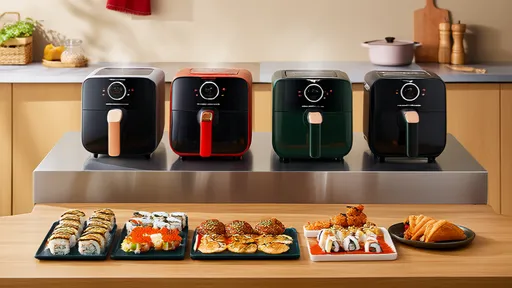
In kitchens across the globe, the air fryer has emerged as a revolutionary appliance, promising the crispiness of fried food with a fraction of the oil. Its appeal is universal, but its true test lies in its ability to authentically recreate the diverse and beloved street foods from every corner of the world. This exploration delves into the culinary prowess of the air fryer, examining its performance when tasked with replicating the iconic snacks that define cultures, from the bustling night markets of Taipei to the vibrant food trucks of Mexico City.
Food

The Impact of 9 Bar Pressure on Crema Formation in Italian Coffee Machines

By /Aug 20, 2025

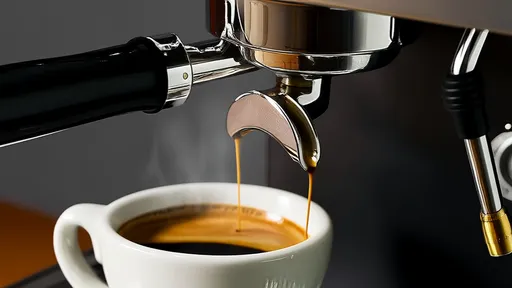
The pursuit of the perfect espresso shot is a journey that marries science with artistry, and at the very heart of this quest lies a fundamental, almost mythical number: 9 bar. This specific pressure, measured in bars, is not an arbitrary figure plucked from thin air but rather the culmination of decades of engineering refinement and sensory evaluation. It represents the sweet spot, the golden mean, where water forced through finely ground coffee achieves an optimal extraction, unlocking a symphony of flavors and, most visually and texturally notably, giving birth to the rich, velvety layer known as crema. The relationship between this precise pressure and the formation of crema is a story of physics, chemistry, and a deep understanding of coffee itself.
Food

Japanese Knife Sharpeners: Blade Retention Between VG-10 and White Paper Steel

By /Aug 20, 2025

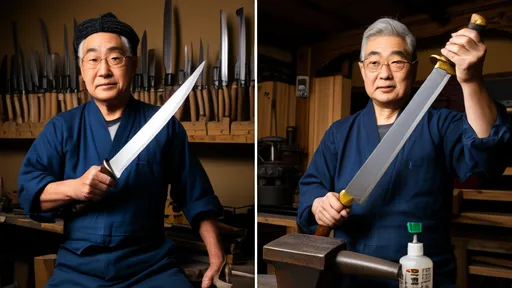
In the quiet workshops of Japan's master bladesmiths, the whisper of steel against stone tells stories of centuries-old traditions colliding with modern metallurgy. Among the most debated topics in cutlery circles is the edge retention comparison between two iconic steels: the traditional Shirogami (White Paper Steel) and the contemporary VG-10. This discussion goes beyond mere technical specifications, touching upon philosophy, craftsmanship, and the very soul of Japanese blade-making.
Food

Vacuum Sealing Machine: Beyond Preservation, How to Use for Quick Marinating"

By /Aug 20, 2025

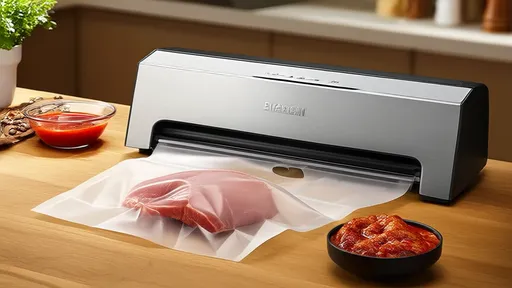
In the world of culinary innovation, the vacuum sealer has long been a trusted ally for preserving freshness and extending the shelf life of ingredients. Tucked away in pantries and professional kitchens alike, its primary function seems straightforward. Yet, beneath this utilitarian surface lies a transformative technique that challenges one of cooking's most time-honored processes: marination. The conventional method of soaking food in a flavorful bath for hours, or even days, is being upended. The vacuum sealer, it turns out, is not just a tool for stasis but a powerful catalyst for rapid and profound flavor infusion.
Food

Precise Temperature Control Oven: Slow-Roasted Beef Brisket Controlled by Mobile APP

By /Aug 20, 2025

In the evolving landscape of culinary technology, the smart oven has emerged as a game-changer for home cooks and professional chefs alike. Among its many capabilities, precision temperature control stands out as a revolutionary feature, particularly when applied to slow-cooking delicate cuts of meat like beef brisket. Traditionally, achieving the perfect slow-roasted brisket required constant vigilance, a reliable oven, and a fair amount of luck. However, with the advent of smartphone app integration, this arduous process has been transformed into a seamless, almost effortless endeavor. This article delves into how app-controlled smart ovens are redefining the art of slow-roasting brisket, offering unparalleled convenience and consistency.
Food

Nutritional Comparison of Cricket Powder and Whey Protein

By /Aug 20, 2025

In the ever-evolving landscape of nutritional supplements, a new contender has quietly emerged from the shadows of traditional offerings, challenging the long-standing dominance of whey protein. Cricket powder, derived from finely milled crickets, represents not merely an alternative but a profound shift in how we conceptualize sustainable nutrition. This isn't a fringe health fad; it's a response to a growing global consciousness about food sources, environmental impact, and holistic wellness. The comparison between this novel insect-derived protein and the ubiquitous dairy-based whey is far more nuanced than a simple protein-per-serving showdown. It delves into the very essence of bioavailability, environmental ethics, and the future of food security.