The pursuit of the perfect espresso shot is a journey that marries science with artistry, and at the very heart of this quest lies a fundamental, almost mythical number: 9 bar. This specific pressure, measured in bars, is not an arbitrary figure plucked from thin air but rather the culmination of decades of engineering refinement and sensory evaluation. It represents the sweet spot, the golden mean, where water forced through finely ground coffee achieves an optimal extraction, unlocking a symphony of flavors and, most visually and texturally notably, giving birth to the rich, velvety layer known as crema. The relationship between this precise pressure and the formation of crema is a story of physics, chemistry, and a deep understanding of coffee itself.
To comprehend why 9 bar is so pivotal, one must first understand the components at play within the coffee puck itself. Coffee beans are a complex matrix of soluble compounds, aromatic oils, and insoluble cellular structures. During the roasting process, carbon dioxide (CO2) is produced and becomes trapped within the bean's cellular structure. Upon grinding, this gas begins to slowly escape, a process known as degassing. When hot water is introduced under pressure during espresso extraction, it rapidly forces its way through this compacted bed of coffee grounds. The pressure does two critical things simultaneously: it dramatically increases the water's ability to dissolve desirable flavors from the coffee cells, and it forcibly emulsifies the insoluble oils and colloids, suspending them in the liquid. Most importantly, it forces the remaining trapped CO2 to dissolve into the hot water under high pressure.
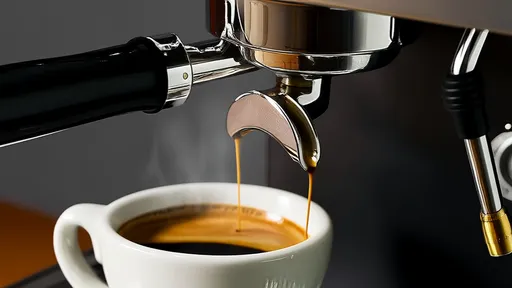
As this high-pressure mixture of water, dissolved coffee solids, emulsified oils, and dissolved CO2 exits the coffee puck and enters the bottom of the espresso cup, it experiences a sudden and drastic drop in pressure—from 9 bar inside the machine to the ambient 1 bar of the atmosphere. This decompression is the trigger event for crema formation. The dissolved carbon dioxide, now unable to stay in solution at the lower pressure, comes rushing out of the liquid in a furious effervescence. These millions of minuscule CO2 bubbles act as a scaffolding. As they rise to the surface, they are instantly coated and stabilized by a film of the emulsified oils and colloids, particularly melanoidins (polymers formed during roasting) and tiny coffee solids. This creates a stable foam, a heterogeneous mixture of gas bubbles suspended in a liquid matrix, which we see as the hallmark crema.
The specific pressure of 9 bar is crucial because it strikes a perfect balance. At pressures significantly lower than 9 bar, the extraction force is insufficient. The water cannot properly emulsify the oils or force enough CO2 into solution. The result is a weak, pale, and quickly dissipating crema, often accompanied by a sour and under-extracted shot. The bubbles are large and unstable, unable to support the weight of the oils, causing the foam to collapse almost immediately. Conversely, pressures that are too high, say 12 bar or more, introduce a different set of problems. The extreme force can over-compact the coffee puck, leading to channeling where water finds the path of least resistance, creating uneven extraction. It can also strip undesirable, harsh, and bitter compounds from the coffee grounds. While it might produce a voluminous crema, this foam is often dry, overly thick, and bubbly with large, irregular air pockets. It tastes bitter and feels unpleasant on the palate, lacking the creamy, persistent texture of a properly formed crema.
Therefore, 9 bar emerges as the industry standard not by accident but by design. It provides enough force to create a super-saturated solution of CO2 in the liquid espresso, ensuring a vigorous and plentiful nucleation of bubbles upon exit. Simultaneously, it provides the ideal mechanical energy to emulsify just the right amount of oils and colloids to create a stable, creamy microstructure within the foam. This pressure allows for a harmonious extraction where sweetness, acidity, and bitterness are in balance, and the crema acts as a visual and textural seal, preserving the volatile aromatic compounds underneath. It is a thick, hazelnut-colored layer with a texture reminiscent of loose honey, often exhibiting tiger-striping or mottling as it pours, a sign of a well-executed extraction.
The quality of the crema is, however, not solely dependent on pressure. It is the final expression of a chain of variables, all of which must be in alignment. The coffee beans themselves must be fresh. Beans that are too old have degassed most of their CO2, leaving little gas to form the bubbles of the crema. The roast profile plays a role; darker roasts typically produce more CO2 and more oils, leading to a darker, more persistent crema, while lighter roasts may yield a thinner, lighter-colored layer. The grind size is paramount—too coarse, and water will flow through too quickly without building proper pressure or emulsification; too fine, and it will choke the machine, leading to over-extraction and a burnt, bitter taste with a dark, tar-like crema. The barista's skill in tamping evenly to create a uniform coffee bed is essential to prevent channeling, which would result in a blotchy, inconsistent crema.
In conclusion, the 9 bar pressure setting on an Italian espresso machine is far more than a technical specification; it is the cornerstone of modern espresso preparation. It is the precise catalyst that transforms a simple infusion of coffee and water into an alchemical wonder. By creating the conditions for forced dissolution and subsequent violent decompression, 9 bar pressure is directly responsible for the formation of crema—that beautiful, aromatic, and flavorful foam that crowns a perfect espresso. It is the physical manifestation of a balanced extraction, a visual guarantee of freshness, and a textural component that completes the sensory experience. It is a testament to the fact that in the world of espresso, perfection often lies in a very specific, and very pressurized, equilibrium.

By /Aug 20, 2025

By /Aug 20, 2025
By /Aug 20, 2025

By /Aug 20, 2025
By /Aug 20, 2025

By /Aug 20, 2025

By /Aug 20, 2025
By /Aug 20, 2025

By /Aug 20, 2025

By /Aug 20, 2025
By /Aug 20, 2025
By /Aug 20, 2025
By /Aug 20, 2025

By /Aug 20, 2025

By /Aug 20, 2025
By /Aug 20, 2025
By /Aug 20, 2025

By /Aug 20, 2025
By /Aug 20, 2025
By /Aug 20, 2025
