In the sun-drenched cafes of Greece, there exists a ritual as integral to the culture as the ancient ruins that dot the landscape. It is the making of a Frappé. This iconic iced coffee, born from a moment of serendipity at the 1957 Thessaloniki International Fair, is more than a mere beverage; it is a symbol of social connection, leisurely afternoons, and a specific, almost alchemical, transformation. At the heart of this transformation lies its most defining characteristic: the thick, creamy, and persistent layer of foam that crowns the drink. This foam is not a byproduct but the very soul of the Frappé, and its quality is dictated by one crucial, human-controlled variable: the number of vigorous shakes administered to its core ingredients in the fateful mixing vessel.
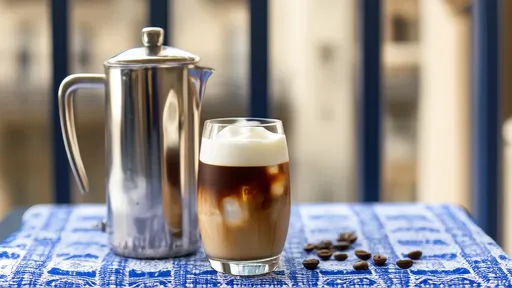
The foundational elements of a Greek Frappé are deceptively simple: instant coffee (typically spray-dried Nescafé), cold water, sugar to taste, and optionally, milk. The magic, however, is unlocked not by the ingredients themselves, but by the kinetic energy imparted upon them. The process begins by combining the coffee and a small amount of water in a cocktail shaker or, more traditionally, a dedicated Frappé mixer—a tall, cylindrical container with a tight-sealing lid. It is in this chamber that the barista, or the home enthusiast, performs the critical act. The initial vigorous shaking aerates the mixture, forcing microscopic air bubbles into the liquid and creating a thick, pale brown foam. This primary foam is then poured into a tall glass, ice is added, and the remaining water (and milk, if used) is poured over the top, creating the characteristic separation between the dense foam and the lighter liquid coffee below.
The relationship between the number of shakes and the resulting foam is not merely linear; it is a journey through distinct phases of texture and quality. A timid effort of ten to fifteen shakes will produce a foam, to be sure, but it will be lackluster. The bubbles will be large, irregular, and unstable, collapsing quickly and failing to provide that luxurious mouthfeel or the structural integrity needed to support a straw. The drink will feel thin and the experience will be underwhelming, lacking the essential heart of a true Frappé. It is a mere shadow of what it could be.
As one commits to the process, entering the range of twenty-five to forty vigorous shakes, the alchemy truly begins. This is the sweet spot for the standard preparation. The increased mechanical action shears the air bubbles into smaller and more uniform sizes. The proteins and fine solids from the instant coffee act as surfactants, stabilizing these millions of tiny bubbles and creating a colloid of air suspended in liquid. The foam becomes noticeably denser, creamier, and significantly more persistent. It will hold its structure for the better part of an hour, allowing the drinker to leisurely work their way through the liquid below while continually scooping up spoonfuls of the rich, coffee-infused foam. This is the texture that defines a well-made Frappé—a velvety, meringue-like crown that is both visually appealing and delicious.
Pushing beyond this, into the territory of fifty shakes or more, enters the realm of the aficionado and the experimental. Here, the foam undergoes a further transformation. The relentless shaking continues to reduce the bubble size, pushing the texture towards an almost mousse-like consistency. This ultra-dense foam is incredibly stable and can sometimes even support the weight of a spoon. Its mouthfeel is profoundly different—less like a froth and more like a light, airy custard. However, this extreme approach is not without its potential pitfalls. Some purists argue that over-shaking can incorporate too much air, leading to a foam that tastes slightly diluted or less intensely of coffee. It can also, if the shaking is overly aggressive with warm ingredients, introduce a slight bitterness from over-extraction. Achieving perfection at this high-shake level requires precision and a feel for the process that borders on artistry.
The science behind this phenomenon is a fascinating interplay of physics and chemistry. The shaking process is fundamentally one of mechanical aeration and emulsion. The rapid back-and-forth motion creates shear forces that break large air volumes into micro-bubbles. The instant coffee particles are key; their large surface area and specific composition make them excellent foaming agents. They migrate to the air-water interfaces of the bubbles, lowering the surface tension and forming a protective layer that prevents the bubbles from immediately coalescing and popping. Sugar, when added, increases the viscosity of the liquid phase, further bolstering the foam's stability by making it harder for water to drain away from between the bubbles (a process known as syneresis). The cold temperature from the ice served in the glass also plays a vital role, as it slows down molecular movement, extending the life of the delicate foam structure.
Ultimately, the number of shakes is the brewer's signature on the drink. It is a variable of personal preference and pride. In Greek households, everyone has their method—a specific count, a certain rhythm—that they swear by. It transforms a simple preparation from a recipe into a ritual. The pursuit of the perfect foam is a pursuit of the perfect Frappé experience: one that is refreshing, invigorating, and texturally sublime. It is a testament to how a humble act, repeated with intention, can elevate a few basic ingredients into a national treasure. So, the next time you hear the rhythmic clatter of ice in a shaker, know that it is not just noise; it is the sound of foam being born, shake by meticulous shake.
By /Aug 20, 2025
By /Aug 20, 2025
By /Aug 20, 2025
By /Aug 20, 2025
By /Aug 20, 2025

By /Aug 20, 2025
By /Aug 20, 2025
By /Aug 20, 2025

By /Aug 20, 2025
By /Aug 20, 2025
By /Aug 20, 2025
By /Aug 20, 2025
By /Aug 20, 2025

By /Aug 20, 2025

By /Aug 20, 2025
By /Aug 20, 2025
By /Aug 20, 2025
By /Aug 20, 2025

By /Aug 20, 2025
By /Aug 20, 2025
